Psychology
Organizational Agency & Empowerment Research
PI name
Dorota Jendza
PI email
dorota.jendza@ug.edu.pl
Short description of research profile
Organizational Agency & Empowerment Research focuses on the psychological and managerial foundations of agency and empowerment in organizational contexts. The research examines how organizational boundaries, cultural conditions, and work environments shape individual and collective agency in diverse types of organizations, including public and business sectors.
University
University of Gdańsk
Research area
SOCIAL SCIENCES » Economics and business
SOCIAL SCIENCES » Psychology
Teachers' and Educators' Creativity Competencies: An International Perspective




PI name
Tonća Jukić
PI email
tjukic@ffst.hr
Short description of research profile
Participants: Teachers and educators in early childhood education and care (ECEC) and elementary and secondary schools, teachers in higher education.
Outcomes: determine possible differences between teachers' and educators' creativity competencies in Croatia and Poland, develop model of psychological and pedagogical assistance in schools and supporting educators/teachers in their new tasks/challenges regarding creativity enhancement in educational institutions.
University
University of Split
Research area
SOCIAL SCIENCES » Educational sciences
SOCIAL SCIENCES » Psychology
University Research Center in Psychology (CUIP) Cognitive Neuroscience Research Group
PI name
Alexandra Reis
PI email
aireis@ualg.pt
Short description of research profile
1. Characterizing the heterogeneity of the cognitive profiles among adults with dyslexia, to understand the mechanisms that enable certain individuals to compensate for their deficits and succeed in their academic lives. while others do not.
2.Continuing to deepen our knowledge about the time course of visual word recognition, both in typical readers and in readers with dyslexia, exploring the electroencephalographic component N170 as a marker of the sensitivity of the reading system to the orthographic characteristics of words.
University
University of Algarve
Research area
MEDICAL AND HEALTH SCIENCES
SOCIAL SCIENCES » Psychology
Work Resilience Lab: Mental Wellbeing, Leadership & the Challenges of Modern Employment

PI name
Aleksandra Peplińska, Dorota Godlewska - Werner
PI email
aleksandra.peplinska@ug.edu.pl
Short description of research profile
The Work Resilience Lab is dedicated to advancing interdisciplinary research on the psychological well-being of employees in the context of contemporary labor market challenges. The Lab explores how resilience can be cultivated at the individual, team, and organizational levels, with a focus on the role of leadership, changing work environments, and employment precarity.
University
University of Gdańsk
Research area
SOCIAL SCIENCES
SOCIAL SCIENCES » Psychology
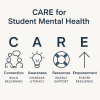
CARE
PI name
Agata Rudnik
PI email
agata.rudnik@ug.edu.pl
Short description of research profile
C – Connection
Foster meaningful relationships and a sense of belonging.
- Encourage peer support, mentorship, and inclusive communities.
- Promote open dialogue about mental health to reduce stigma.
- Strengthen bonds between students, faculty, and support services.
A – Awareness
Increase understanding and literacy around mental health.
University
University of Gdańsk
Research area
SOCIAL SCIENCES
SOCIAL SCIENCES » Psychology
HUM843 Emotional Intelligence
PI name
Ms. Rocio Guil Bozal
PI email
rocio.guil@uca.es
Short description of research profile
- Emotional intelligence, quality of life and health: Patients with chronic diseases, Clinical population in psychotherapy, LGTBI Collective, General population, Promotion of E-health in clinical and non-clinical populations through mobile APPs.
- Emotional intelligence and education
- Gender
- Attitudinal analysis and wine consumption through biometric, physiological and augmented reality measurements. Wine tourism. Neuromarketing and advertising.
- Sexual and gender diversity, affirmative psychology and health.
University
University of Cadiz
Research area
SOCIAL SCIENCES » Psychology
SOCIAL SCIENCES » Educational sciences
SOCIAL SCIENCES » Sociology
Inclusive Educational Technologies Research Group
PI name
Jelena Nakić
PI email
jelena.nakic@pmfst.hr
Short description of research profile
University
University of Split
Research area
NATURAL SCIENCES » Computer and information sciences
SOCIAL SCIENCES » Psychology
SOCIAL SCIENCES » Educational sciences
SOCIAL SCIENCES » Media and communication
Growing up and being on the outside
PI name
Ingrid Fylling
PI email
ingrid.fylling@nord.no
Short description of research profile
The research group is concerned with studying both which mechanisms increase the risk of alienation, what characterizes children and young people's own experiences with alienation, and what consequences alienation has for the individual child and youth, and for society.
The term outsiders describes a situation where individuals or groups of people stand outside what are considered central social arenas, for example where they do not participate in work life or take education, or where they lack linguistic or cultural connection to the rest of society.
University
NORD University
Research area
SOCIAL SCIENCES
SOCIAL SCIENCES » Psychology
Ethnographic welfare studies
PI name
Guro Wisth Øydgard
PI email
guro.oydgard@nord.no
Short description of research profile
The research group for ethnographic welfare studies is particularly concerned with the consequences of legislative changes and reforms for both service providers and users.
In recent decades, a number of legislative changes and reforms have been implemented in Norway.
University
NORD University
Research area
SOCIAL SCIENCES
SOCIAL SCIENCES » Psychology
SOCIAL SCIENCES » Sociology